
"coffee fruit development"
10000 article(s) found

Costa Rican boutique Coffee Manor Las Haas Manor Coffee Origin, Development, History and Culture
Anchor Costa Rica Las Haas Manor Coffee Flavor description Grinding scale method Villasarchi is derived from the red bourbon species, with bright and delicate citrus acidity and low raisin and nut aromas, the high complexity balance rod is a rare excellent coffee variety. The manor covers an area of 4 hectares in the highland about 1600 meters above sea level, and the coffee fruits harvested will be sent together.

A brief introduction to the history and culture of the origin, development and development of Yega Sheffivoka boutique coffee beans with soft flower scent.
Planting: coffee trees are mostly planted in farmers' own backyards or mixed with other crops in the field, with little yield per household, which is a typical pastoral coffee. These mountain villages are foggy, like spring all year round, with a gentle breeze in summer, cool but not hot, rain but not damp, and no cold damage in winter, giving birth to a unique regional flavor of citrus and flowers. Taste: the so-called Yega Snow Flavor refers to rich jasmine

The frozen storage of coffee seeds enables the seeds to be preserved well for a long time.
The French Development Institute has recently successfully invented a method of long-term frozen storage of small fruit coffee seeds, which provides a reliable means for establishing a small fruit coffee seed bank and protecting biodiversity. Coffee belongs to Rubiaceae evergreen shrubs or small trees, mainly produced in tropical areas, there are small fruit coffee, medium fruit coffee and large fruit coffee and so on. Small fruit coffee is native to the Arab region and is currently grown in the world.

A brief introduction to the Origin, Development, History and Culture of Katim Fine Coffee beans suitable for Deep Baking
Catimor: in 1959, the Portuguese mixed Brazilian Kaddura and Timo to develop a disease-resistant Katim / Katimo, which is now an important variety of commercial beans. Coffee is a short-day plant. Coffee has the characteristics of multiple flowering and concentrated florescence. The florescence of small seed coffee in Yunnan is 27 months, and the flowering period is 35 months. The flowering of coffee is affected by the climate, especially the rain
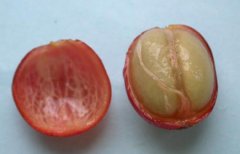
The Cultural Story of Coffee Development "Blackwater"
In the eighth century AD, there was a magical black water called Qahwa in the Arabian Peninsula, which was said to restore physical strength, exuberance, and no sense of purpose. The tenth century Muslim philosopher and Iranian doctor Avicina Ibn Sina,980-1037 recorded a plant from Yemen called Bunchum, which is said to be something like coffee. As early as

A brief introduction to the Origin, Development, History and Culture of Honduran Fine Coffee beans that can be mixed with Comprehensive Coffee
The extremely balanced nature of Honduran coffee makes it a wide range of uses. Can be used to mix coffee, can also be used as a single product to brew, mixed with Honduran coffee Italian concentrate will have a surprising effect. Although in troubled times, coffee can also grow its own beauty, it is not difficult to understand why so many people are so obsessed with this dark liquid.

Introduction to the History, Culture and Development of Coffee in Ethiopia
Following Cafe Review (Wechat official account vdailycom) found that the Beautiful Cafe opened a small shop of its own, Ye Jia Xuefei Coffee, which refers to Ye Jia Xuefei Coffee, which is produced in Ethiopia. Yega Xuefei is the name of a local town. It is about 1700-2100 meters above sea level. Now Yejashafi coffee has become synonymous with Ethiopian boutique coffee. History: at first, Yega Xuefei's

A brief introduction to the History and Culture of the Origin and Development of Honduran Coffee beans used to prepare Comprehensive Coffee
What is there to miss about coffee in this turbulent country? Honduran coffee does not have very distinctive characteristics. Its biggest feature is that the overall taste is rich and well-balanced. Medium or shallow acidity, giving the impression of obvious but not strong. Sometimes it has a beautiful floral or fruity aroma (generally speaking, beans produced in different regions and at different elevations have different performances)

A brief introduction to the history and culture of the origin and development of lively and rich Panamanian boutique coffee beans
In addition to the unique ultra-high altitude and microclimate, Mr. Wilford, the owner of the manor, has also made considerable efforts in harvesting and processing. In order to meet the highest standard, the coffee at Elida Manor is only allowed to pick the most ripe coffee fruit (RipeonPinton) by hand. The maturity of the fruit is high, and the sugar content of pectin is naturally high, which is also the basis for producing the high quality flavor of Elida.

The Development of Costa Rican Coffee
Coffee is an important economic source of Costa Rica. It was introduced in 1808 and has been cultivated for 200 years. Costa Rica has 1x3 population invested in newly developed villa sarchi, newly developed villa sarchi and coffee-related industries. Colombians say that coffee has changed the country and enjoyed a rich environment, and coffee has indeed made an outstanding contribution.

The Development of Costa Rican Coffee
Coffee is an important economic source of Costa Rica. It was introduced in 1808 and has been cultivated for 200 years. Costa Rica has 1x3 population invested in newly developed villa sarchi, newly developed villa sarchi and coffee-related industries. Colombians say that coffee has changed the country and enjoyed a rich environment, and coffee has indeed made an outstanding contribution.

Arabica hybrid variety Panamanian honey treatment Aishb coffee bean origin and development history
Kaduai also has the difference between red fruit and yellow fruit. Statistically, Hongguo Kaduai often wins prizes. Kaduai, Kaddura, New World and Bourbon are listed as the four main varieties in Brazil to be called "Tropical Rainforest Alliance certified coffee". In addition, part of the proceeds are also used for wildlife protection in tropical rainforest animal reserves. In terms of labor life and well-being, it is a pair of coffee with a good natural environment. And

A brief introduction to the origin, development, history and culture of 90 + candlestick boutique coffee beans that are close to the people and delicious.
Drima Zede means Best Approach in the local dialect. According to the information provided by the original factory, this Yega Xuefei is a series of tailor-made products based on 90 + years of experience. It is difficult to get a pure flavor in the ancient treatment of the sun, but Drima Zede is only hand-selected with the support of 90 + technology.

A brief introduction to the history and culture of the origin and development of Bolivian boutique coffee beans with dried almonds
Bolivia not only has a unique growing environment, but also has an excellent coffee variety Typica. In the past two hundred years, the main variety of coffee in Yanggas area is the ancient Tibica. Tibica coffee has a balanced and soft flavor, with lively aroma and rich sour taste. Unfortunately, the low production of Tibika and its poor disease resistance make Bolivia's

A brief introduction to the origin, development, history and culture of the noble Cuban Crystal Mountain boutique coffee beans.
Crystal Mountain Coffee beans are typical island beans with a clean and delicate taste, slightly sour taste, not strong but long-lasting, with sweet fruit aromas. The coffee made by it was owned by Jane in 1748, and coffee was introduced to Cuba from Domiga, and Cuba has been growing coffee ever since. With fertile land, humid climate and abundant Rain Water, Cuba can be called a natural treasure land for coffee cultivation. Suitable self

The Development of Coffee Culture Coffee what are the changes in the taste of different varieties of coffee
In China, whether at work or after work or outside the office or home, there is coffee drinking, the quality of life that Chinese people pursue is getting higher and higher, and coffee sales in China are also very high. there are also a lot of cafes, and the main source of coffee is that in the West, at first, Arabs dried coffee beans and boiled them, when drugs were used and then gradually turned into beverages in China's Shennongbai.

Blueberry Tea Fragrance of Sitama Charkiso Fine Coffee Bean Origin Development History Culture Introduction
Origin: Sidamo Variety: Native Arabica Treatment: Wash Roast: Medium Roast Origin: Sidamo Variety: Native Arabica Treatment: Wash Ethiopia's western highlands have bred new coffee varieties that are resistant to fruit disease or leaf rust. Ethiopia is known for its many coffee types. Some of these masters

The source of Bassirou Rubi coffee beans the flavor of Ruby coffee beans without peel and sun on Pacio Farm
Ruby Rubi (ruby) coffee bean comes from the development of bean breeding, and the most important development in Brazil in the last century is undoubtedly the Catua bean seed. Kaduai is artificially mixed with Mundo Novo and Kaddura, developed by the Campinas Agricultural Research Institute (Instituto Agronomico; I) in the state of Sao Paulo, Brazil.

A brief introduction to the history and culture of the origin and development of Bolivian boutique coffee beans with balanced taste
Bolivia has made a lot of efforts to improve the quality of coffee, stimulate the enthusiasm of coffee farmers and make coffee farmers have a deeper understanding of fine coffee. After the introduction of the COE competition, in the first COE competition held in 2004, there were 13 boutique bean cups with a total score of more than 84 points, and the champion bean score was as high as 90.44 points.

A brief introduction to the history and culture of the origin and development of traditional raw bean treatment methods 90 + W2, H2, N2
90 + based on the original excellent raw beans, continue to be graded as follows: Level 7: single production area harvest. Rare varieties with fine taste and special flavor are selected by hand and then treated by NinetyPlus to reach the standard of more than 90 +; Level 12: harvested in a single production area. Negative forms such as must be recognized and indelible are used on the website.